
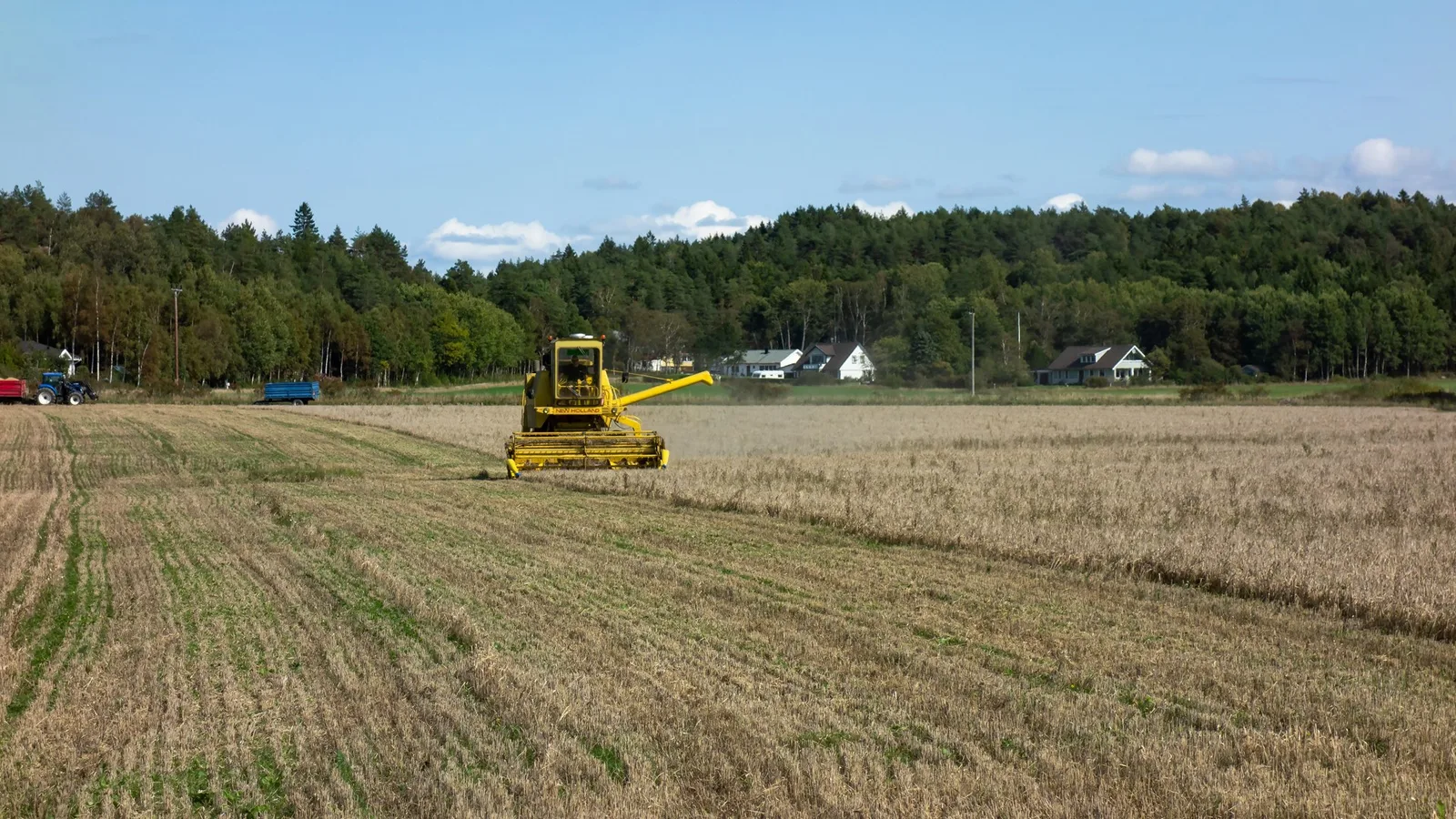
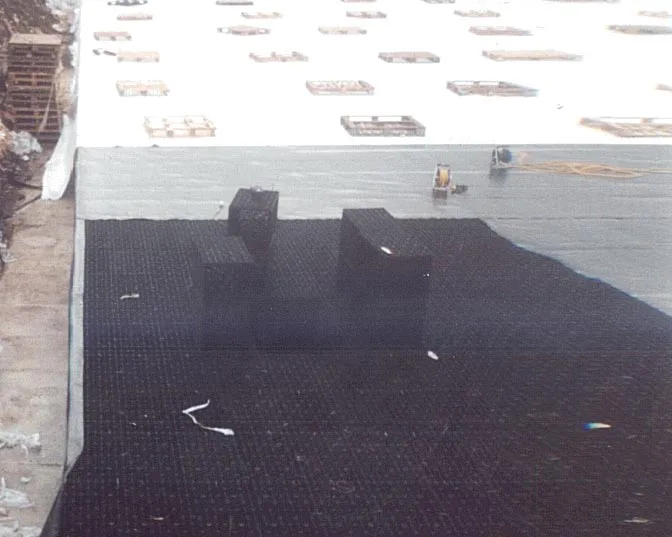
Gåseberg, Sweden · September 2018. Photo: W.carter / Wikimedia Commons (CC0).
The challenge
When demand outlasts the rain
Large roofs may shed useful water while landscaped areas, nurseries and farms need irrigation. The challenge is to match collection, storage and demand across time.
The solution
Collect, store and reuse
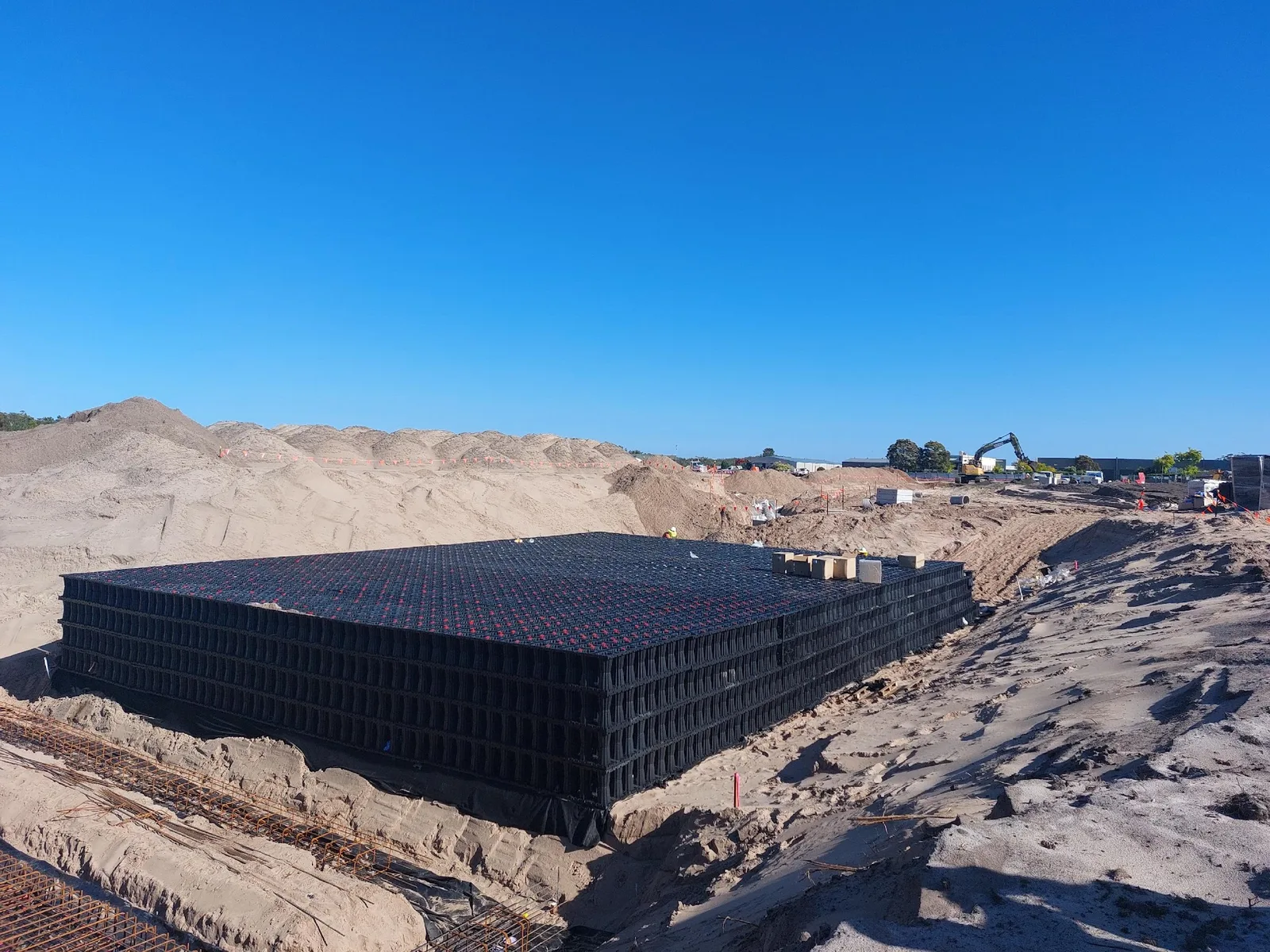
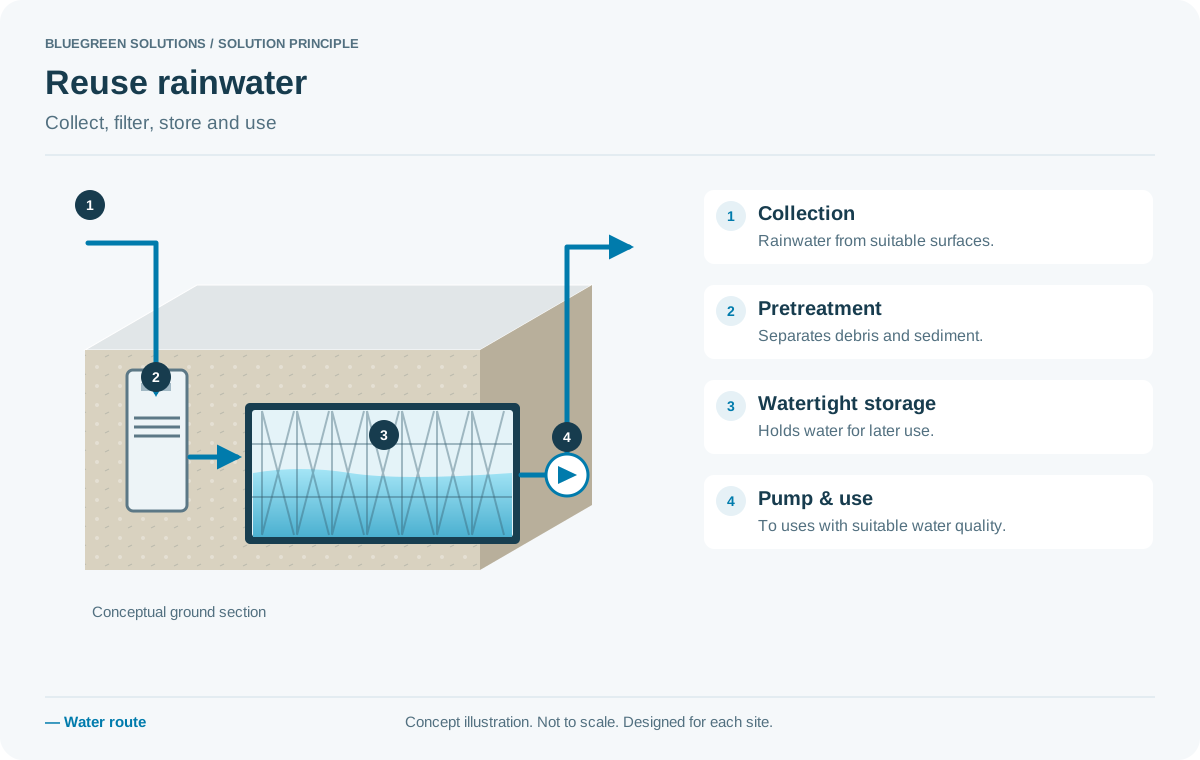
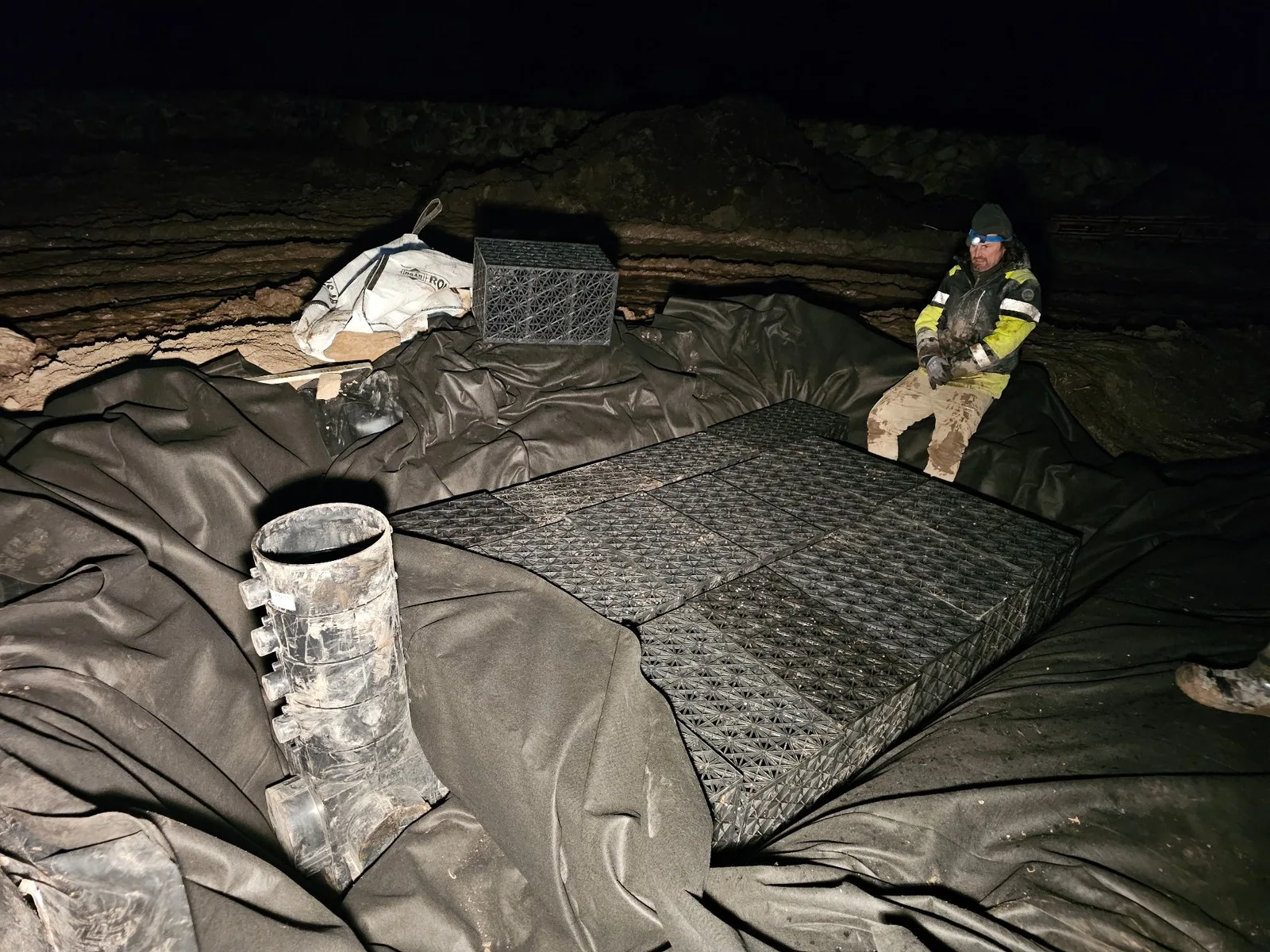
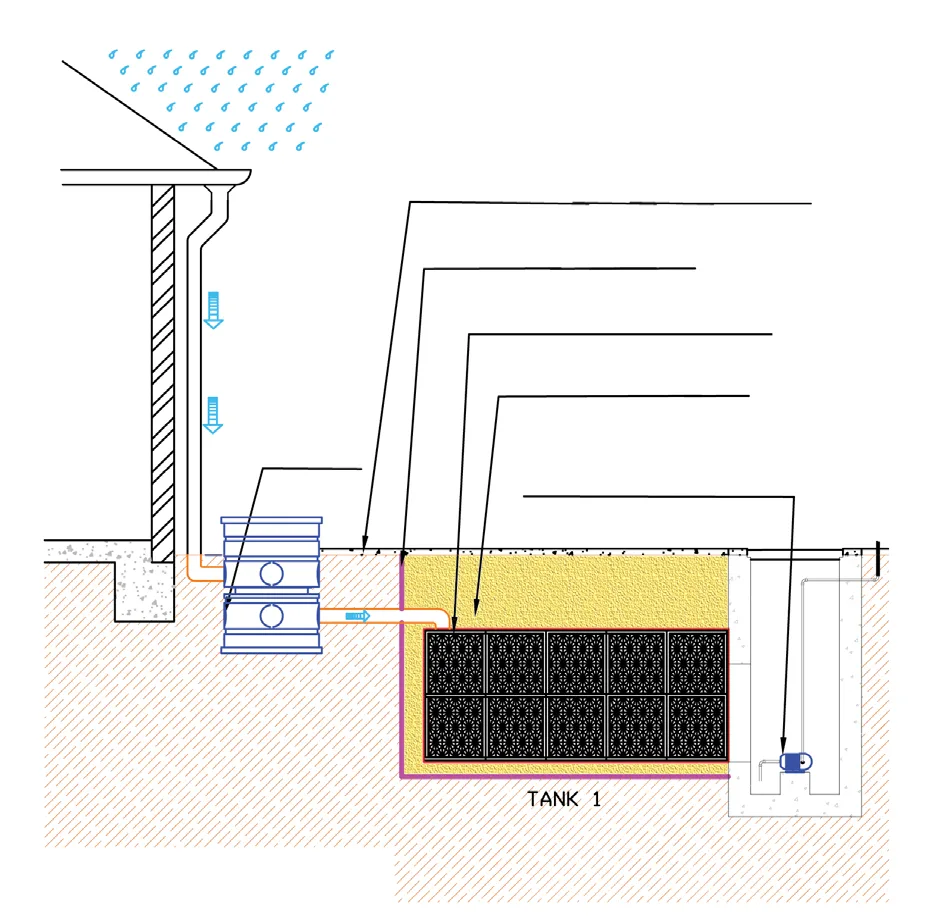
A rainwater harvesting system collects runoff from suitable surfaces, passes it through pretreatment and stores it in a watertight underground tank. A pump supplies irrigation or another suitable use. Storage sizing considers rainfall, collection area and the timing of demand.
Suitable applications
Landscape irrigation, horticulture and farm applications assessed for the required water quality.
Section & water flow
See how the solution works.
What shapes the design?
Rainfall records; collection area; demand by season; water quality; space for storage.
Technical planning guidanceCollected volume is not the same as tank capacity.
The same tank can fill several times over a year. Collected annual volume and tank capacity are different quantities. Reliability needs a site-specific water balance.
Explore the potential
How much water could your site collect?
Explore the volume from a rainfall event or a period. Enter rainfall relevant to your location and see how the collection area and runoff coefficient affect the result.
This estimates collected water volume. Storage design also requires local rainfall, flow, ground conditions, intended use and applicable requirements. The result is neither a required storage size nor a guaranteed water supply.
International supplier references
Solutions in real settings.
Projects delivered by other organisations, with information from the project teams and suppliers.
Potential funding
Explore funding opportunities.
Public grants may be available for your water or environmental project. Aqua Funding helps you explore possible opportunities.
Eligibility depends on your location, organisation and project. Availability and approval are determined by the relevant funding body.
A separate service. Opens in a new tab.
What could you do with your water?
Tell us about your project and take the first step towards a solution tailored to your organisation.
A useful starting point
- Your organisation and project location
- What you want to achieve
- Approximate roof and ground areas
- A drawing or site plan, if available
- Your preferred timeline
We can help you move forward with the information you have.